Liberia: Part One | Ten Miles Past the Border
“We must go. There isn’t time.”
Our time in Gola Rainforest ended the way good places often do, abruptly and with no clean exit. We were leaving Sierra Leone and heading for Liberia, but first we had to get out. We found ourselves stranded in a small outpost village near the border, heat sitting heavy, the road quiet. Lucy spoke to two groups of pen-pen riders (Liberia’s motorbike taxis) but there was no progress. The prices were inflated well beyond reason, numbers pitched for our desperation rather than distance. We declined. After a while, it felt like we might be staying put so we ordered lunch. We were sat inside a small wooden veranda on the edge of the only junction in the village. It was the only shelter from the blistering midday heat.
After Lucy had become exasperated with fruitless effort, I tried my luck. I walked over to the riders and made an offer. It was immediately doubled. I raised it. It rose again. Two more riders arrived, edging in with competing prices, and the tone shifted. Voices lifted. Arms flew. The negotiation stalled and began to sour. Then Lucy shouted my name from across the junction. Her voice carried urgency, enough that I abandoned the conversation and walked back immediately, suddenly alert to everything around me. Lucy was already packing up our things. As I reached the wooden porch, the situation clarified itself. She wasn’t calling me. She was calling Sammy. Sammy was a park ranger we’d met days earlier in Sierra Leone. He’d been our driver on the punishing road to Siletti.
“Need a ride?” he said, grinning. “We must go. There isn’t time.”
Lunch was abandoned immediately. After a morning where nothing had moved, everything suddenly did. This was the opening. We threw our bags into the back of the truck and climbed in. Inside, the mood was instantly familiar. Sammy carried the same calm he’d had on the road into Gola, steady, unflustered, talking and laughing as if we’d known each other for years rather than days. Only then did we realise who we were travelling with. The convoy was escorting Martin Harper, then Global Conservation Director of the RSPB, toward the Liberian border. The importance of the journey was clear enough: multiple vehicles, contingency plans, backups in case anything broke down. We were riding in one of the backups.
The road carried us toward the Mano River Bridge crossing. At Gonghu, we stepped out together, passports already in hand. Border crossings like this usually unfold slowly, officials seated on plastic chairs, paperwork drifting along at its own pace. This one didn’t. Beneath rows of tarp shelters and trestle tables, officials were alert and moving with purpose. I introduced myself to Martin and mentioned we’d just come from Gola and Tiwai.
“Oh! You’re the ones who did the big rainforest hike?” he said.
Tourism in this part of Sierra Leone had never fully recovered after Ebola, and our presence had travelled ahead of us. We spoke briefly about cocoa grown inside the park and the first chocolate bars being produced from it. I promised I’d look out for them later. I assumed we were being guided toward another line. Instead, we were waved through. Just like that, we were in Liberia. The crossing that had been described to us as slow and bureaucratic was over in minutes.
Before we split off, we waved back across the road to Sammy. He raised a hand from the cab, smiling, already half-turned toward whatever came next. We shouted our thanks, though it felt redundant, he’d carried us this far, and that was enough. Then the convoy pulled away, and we were on our own again. We sat down by the roadside to take stock, caught out by how little of a plan we now had. A man in a shirt with epaulettes barked at a younger official holding what looked like the ledger our details had just been written into.
“Let me speak to him,” Lucy said, already moving. She came back with a solution. We were heading to Robertsport, about ten miles from the border, and we had transport. Just like that, we were moving again.
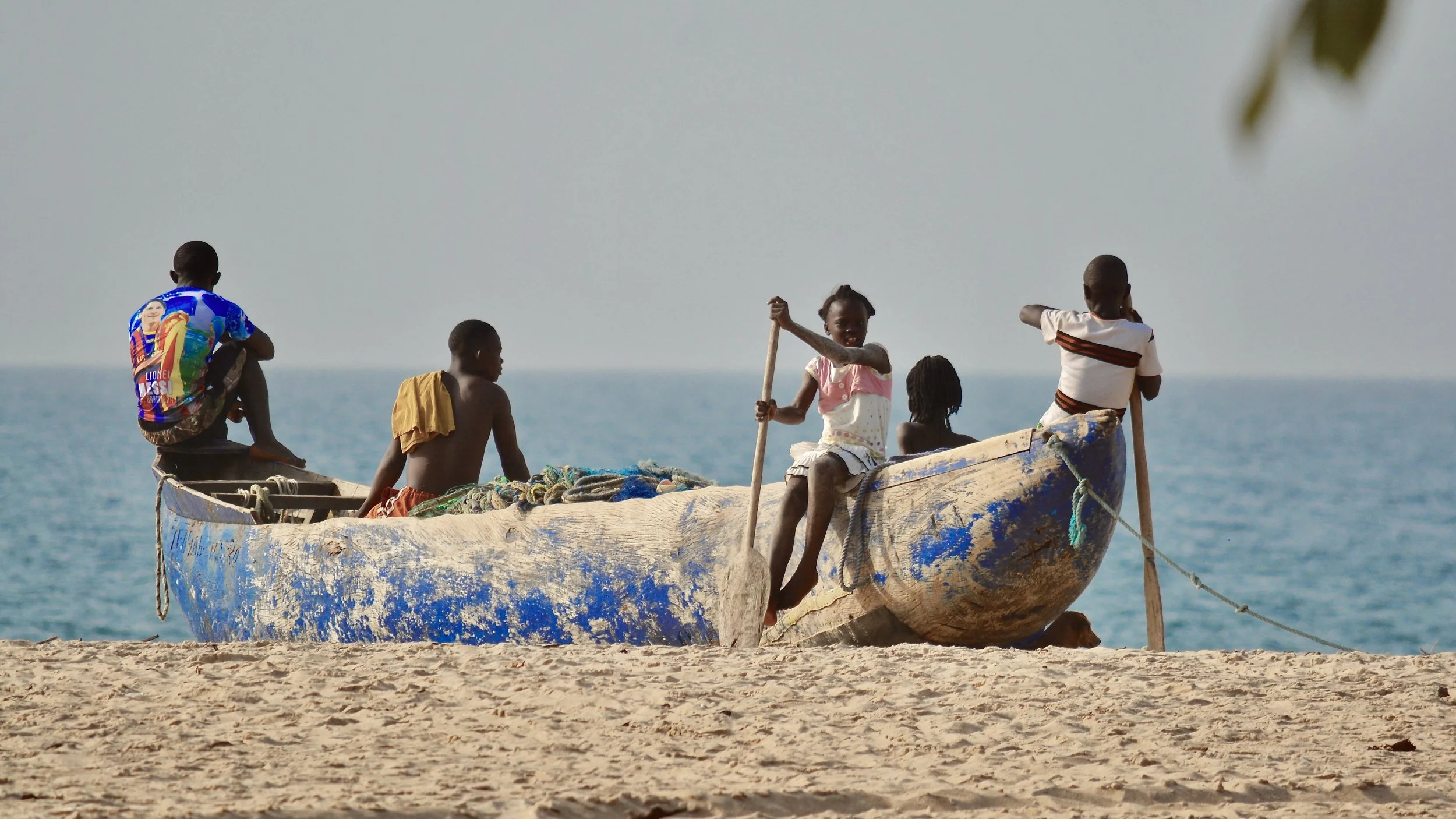
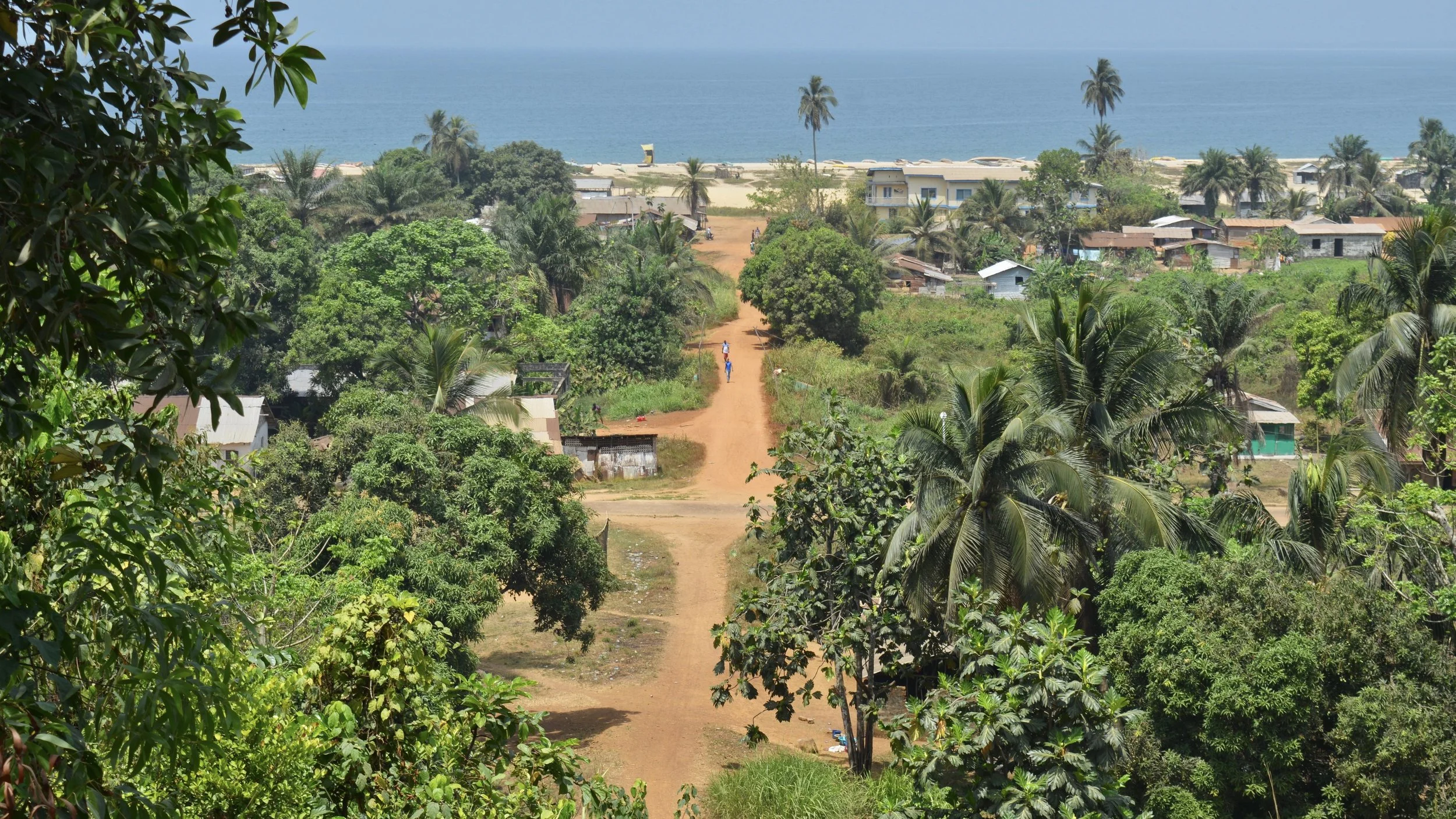
Robertsport is Liberia’s wild-coast jewel. Set on a narrow spit of sand, the town sits between the tidal waters of Lake Piso and the open Atlantic. Long a fishing settlement with roots stretching back to freed American settlers in the nineteenth century, Robertsport is now beginning to attract eco-travellers and wave-chasers, drawn by its laid-back culture and the magic of a place off the usual map.
“Conflict dominated coverage through the 1990s and early 2000s and left little room for anything else. Standing on this beach fifteen years later, watching boards carried toward the water and fishing nets pulled from it, what I had been taught felt too narrow.”
We arrived to a warm ocean breeze sweeping in from the water. Our pen-pens slowed beside a loose cluster of benches and stools arranged beneath tropical almond trees, an informal meeting place at the edge of the beach. Our backpacks had barely touched the ground when a woman approached. We ordered beer and fish. She moved away at the same unhurried pace she had arrived.
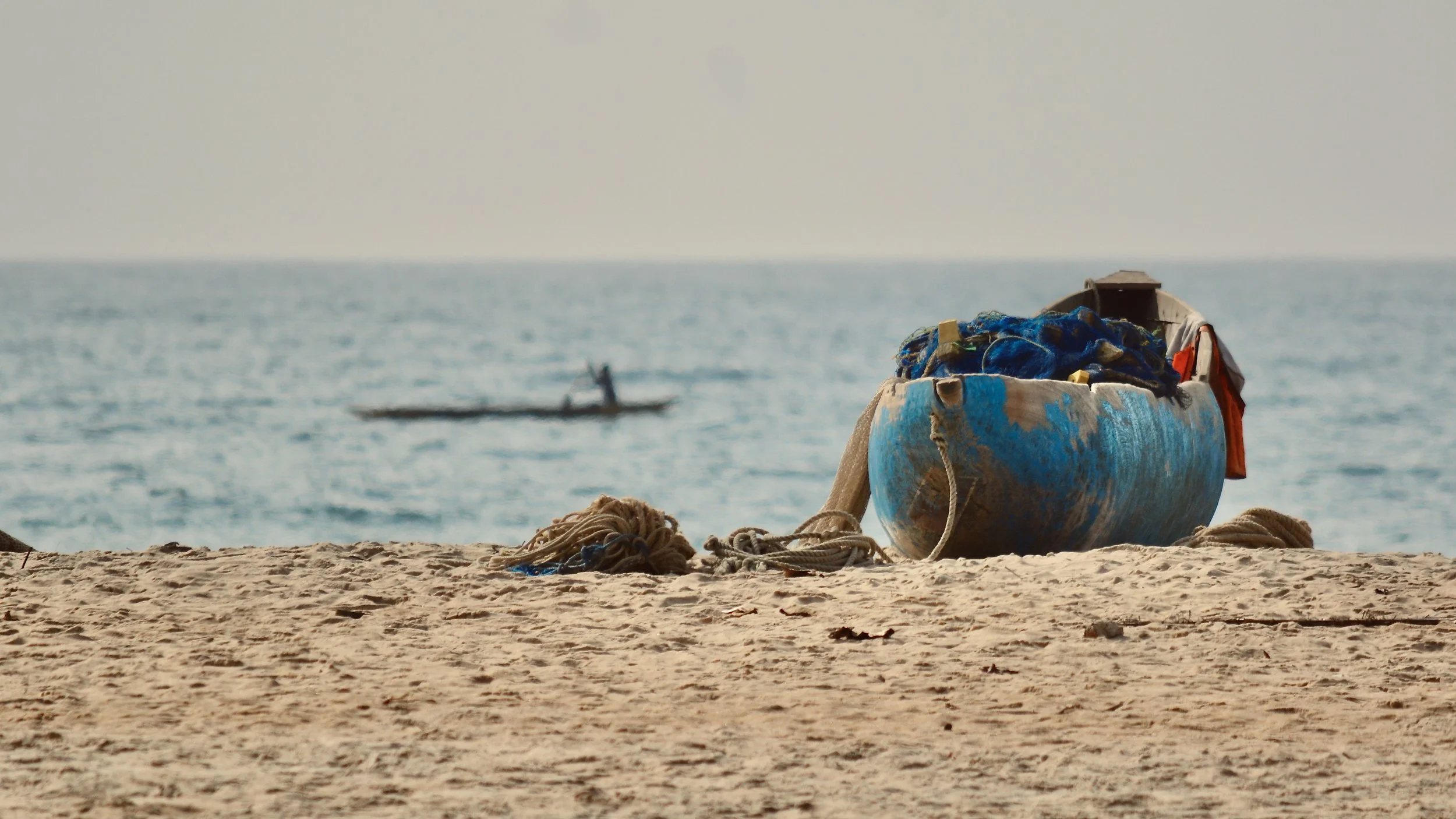
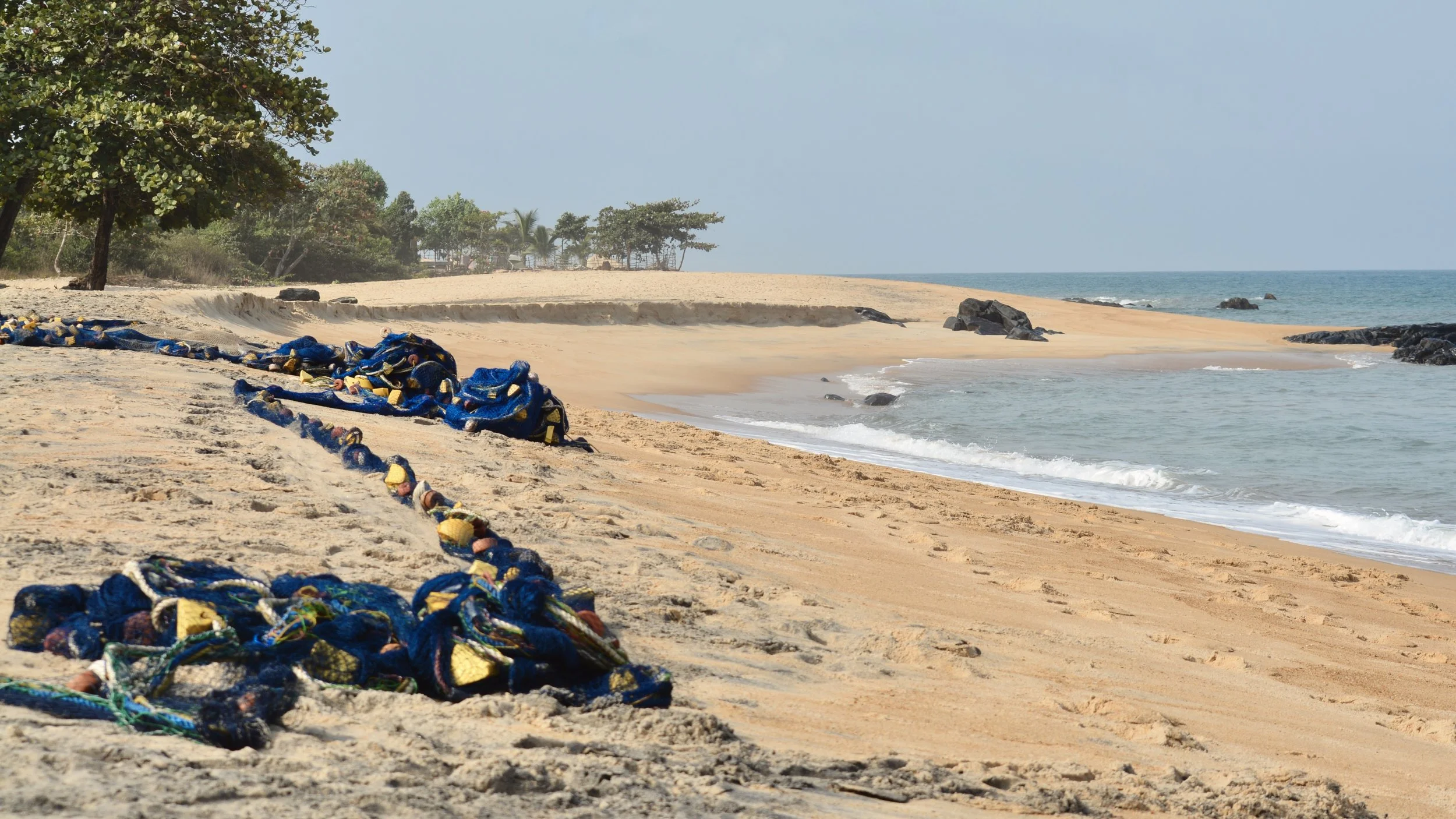
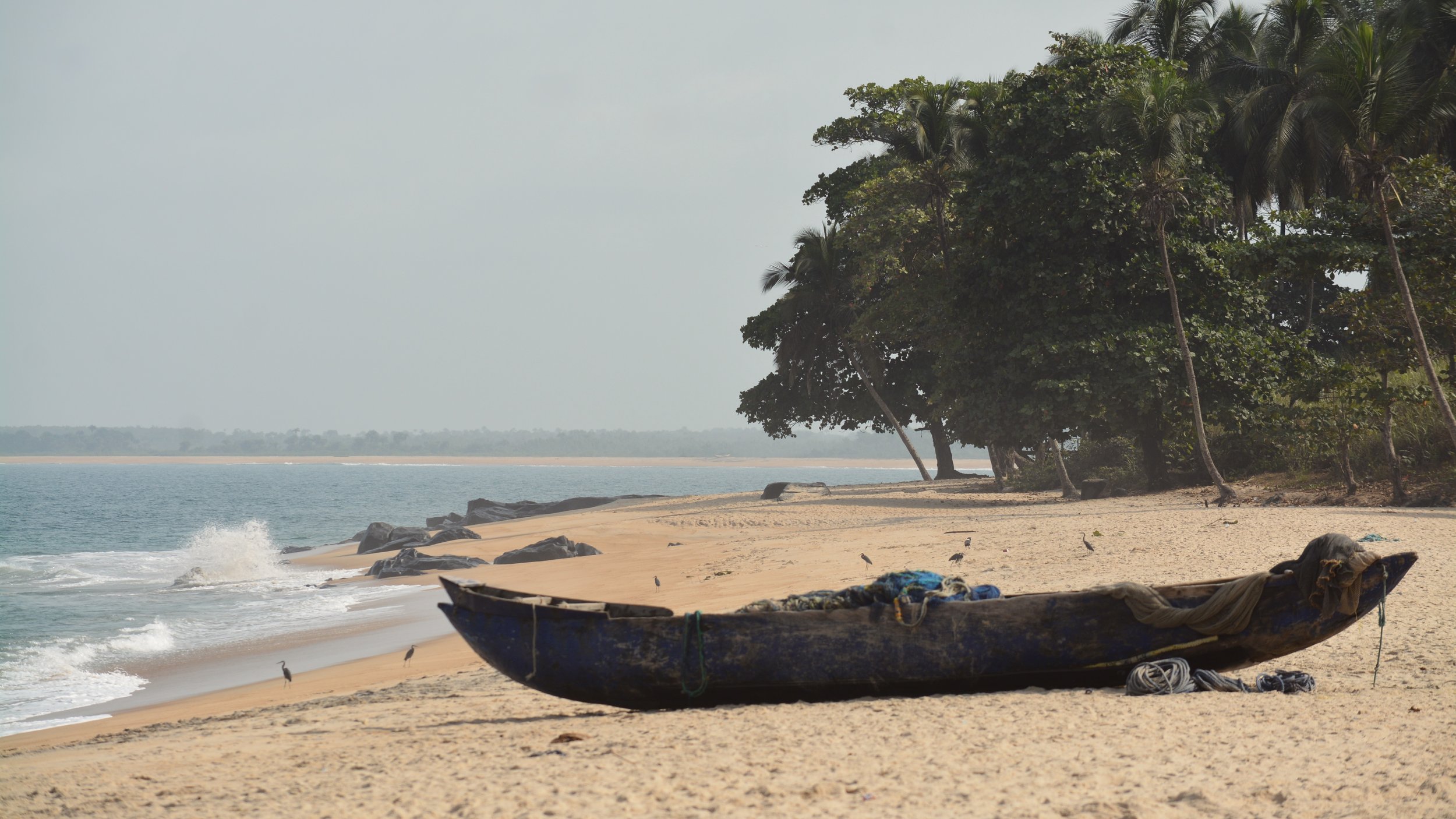
Along the shoreline, people gathered instinctively in the shade of mango trees. Children ran barefoot along the waterline, weaving between brightly painted wooden canoes propped up with driftwood. Fishermen moved steadily between surf and sand, hauling nets, mending lines, and guiding narrow boats through the shallows. Nearby, a young man sat with his back against a coconut palm, absorbed in the everyday choreography of Robertsport’s coast.
The scene was busy without feeling crowded and the line between town and sea felt loosely held. After days of constant motion in Sierra Leone, the slower rhythm was delicious. My body seemed to register it before I did, exhaling cartoonishly as it eased into the unrushed pace.
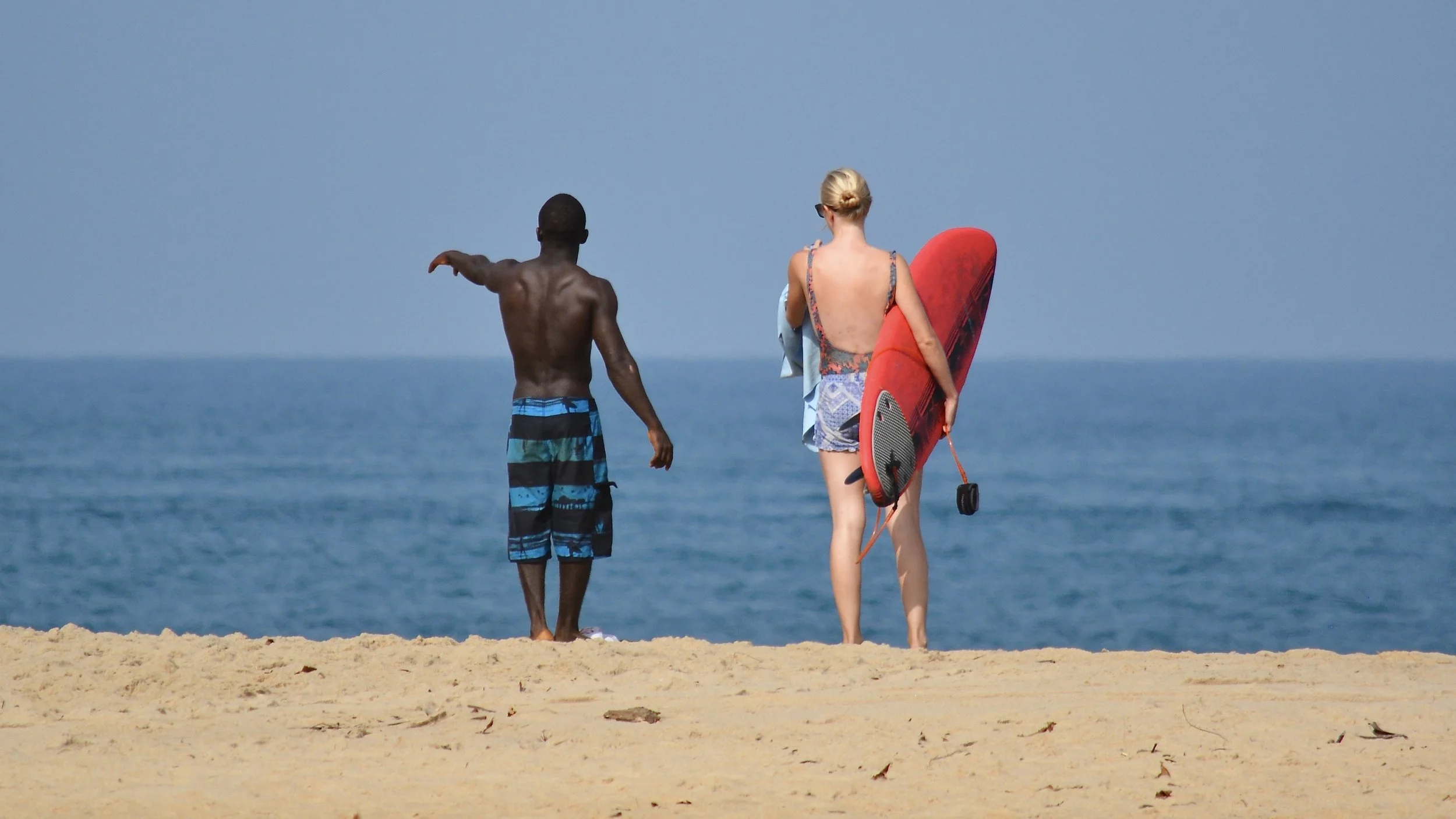
“That afternoon, Lucy carried a board down the sand and paddled into the break. From shore, I watched the sets peel through without interruption, gradually losing track of the bottles of beer I had ordered.”
Robertsport is best known locally as a fishing town, but in the last decade it has also become one of West Africa’s most quietly significant surf locations. Sitting on the exposed edge of the Cape Mount Peninsula, the town faces directly into long Atlantic swells that travel uninterrupted from the southern hemisphere. When those swells arrive, they bend around the headlands and peel along the beaches north and south of town, producing consistent, high-quality waves for much of the year.
I grew up during the years when Liberia appeared in international news largely through images of war. Conflict dominated coverage through the 1990s and early 2000s and left little room for anything else. Standing on this beach fifteen years later, watching boards carried toward the water and fishing nets pulled from it, what I had been taught felt too narrow.
What began as a curiosity with young men paddling out on donated boards, learning through trial and error, has developed into a small but established surf culture. It remains informal and largely uncommercial, shaped by local life rather than outside demand, but the breaks have gradually drawn attention beyond Liberia’s borders.
Surfing in Robertsport is not packaged. What made Robertsport remarkable to me was not just wave quality but absence. There were few crowds and no commercial surf infrastructure to speak of. The breaks operated within the rhythms of fishing and daily life, something that became immediately apparent once I’d spent a day on the beach.
The most talked-about waves sit just beyond the town’s everyday activity. Fisherman’s Point breaks close to shore, a workable left that draws local surfers because it is forgiving, readable, and close enough to paddle out between fishing boats. Further along the beach are the Inner and Outer Cottons, named for the towering cotton trees that dominate the shoreline and serve as navigational markers. These are heavier waves, long, wrapping left-handers that can run for hundreds of metres when the sandbanks and swell cooperate. On the right day, Outer Cottons produces rides that would be headline material anywhere else in the world. Here, they arrive quietly, sometimes witnessed only by those already in the water, we were told.
That afternoon, Lucy carried a board down the sand and paddled into the break. From shore, I watched the sets peel through without interruption, gradually losing track of the bottles of beer I had ordered. The story of the Robertsport Surf Club, once confined to a handful of visiting surfers, had been building steadily by the time we visited in 2018. Since then, travel publications have begun to describe the town as one of Africa’s last undiscovered surf destinations.
Surfing arrived late to Liberia, and later still to Robertsport. Civil war hollowed out everyday life along the coast. Boards were scarce, travel impossible, and the ocean remained primarily a workplace rather than a recreational space. When surfing did begin to take root in the years following the conflict, it developed gradually with a slow, informal transfer of knowledge rather than any organised programme.
By the mid-2010s, that transfer had begun to solidify. Watching them share boards and repairing fins with improvised materials, it was evident that Robertsport Surf Club had emerged as a loose collective of young and optimistic Liberians. Older fishermen watched with curiosity and a quiet kind of pragmatic acceptance. The same ocean could hold more than one livelihood.
That evolution is documented most clearly in two films by Arthur Bourbon: Water Get No Enemy and We the Surfers.
Both resist romanticising the sport. Instead, they frame surfing as a social experiment evolving in real time, young men negotiating identity, patience, and belonging in a country where opportunity remains unevenly distributed. Surfing is not portrayed as escape, but as discipline, something that rewards attention and persistence, and offers little to those who expect quick returns.
By the time we arrived, that discipline was visible in the water. Lucy paddled out with a local surfer who had offered to show her how the wave worked. For a while, they were alone. From shore, the lineup sat empty, the sets breaking without interruption.
A handful of surfers joined later, entering the water gradually, with sets were taken in turn. Onshore, boards leaned against upturned wooden canoes lay half-buried in sand between sessions.
I woke later to the smell of salt, fish, and wood smoke drifting in from behind me. Fires burned beneath two large metal drums where fish had been laid out to dry for supper. Along the shoreline, fishermen hauled in their nets after returning in pairs in narrow wooden canoes. The woman who had served us beer earlier in the afternoon walked down to the water to buy mackerel from the catch. It became our dinner. Sets arrived, broke, and passed. Many went unridden. Others were taken without urgency, surfers paddling back to the lineup rather than rushing the inside.
Surf tourism has begun to orbit Robertsport, but cautiously. A handful of international surfers now make the journey each year. Accommodation remains basic, and there is little appetite locally for rapid development. Surfing here still exists within a broader coastal economy where fishing remains central.
That relationship is not without tension. Local fishermen describe foreign trawlers encroaching on near-shore waters reserved for small boats, undermining a town where livelihoods hinge almost entirely on the sea. In response, community reporting and joint patrols involving Liberian authorities and conservation groups, including Sea Shepherd, have become more visible. Their presence has reportedly deterred some illegal operators.
Later, I caught up with Lucy and we walked back toward our hostel together, comparing notes from the day. We spoke about the waves and how much time we could spend there if only we had limitless time. When we reached the hostel, the light was beginning to soften and the town was easing toward evening. We cleaned the salt from our skin, changed clothes and headed back out for sunset beers.
Rather than claiming the ocean, surfing in Robertsport exists alongside nets drying in the sun and boats launching through shore break. That coexistence feels fragile but functional and it reminded us that even the world’s “undiscovered” surf destinations are lived-in places.
“I had just identified a route deeper down when a wave struck the hull, sending spray skyward and into the cabin. The decayed layers of the frame answered with a low, uneven shift. We took that as our cue to stop, our brief experiment in piracy concluded.”
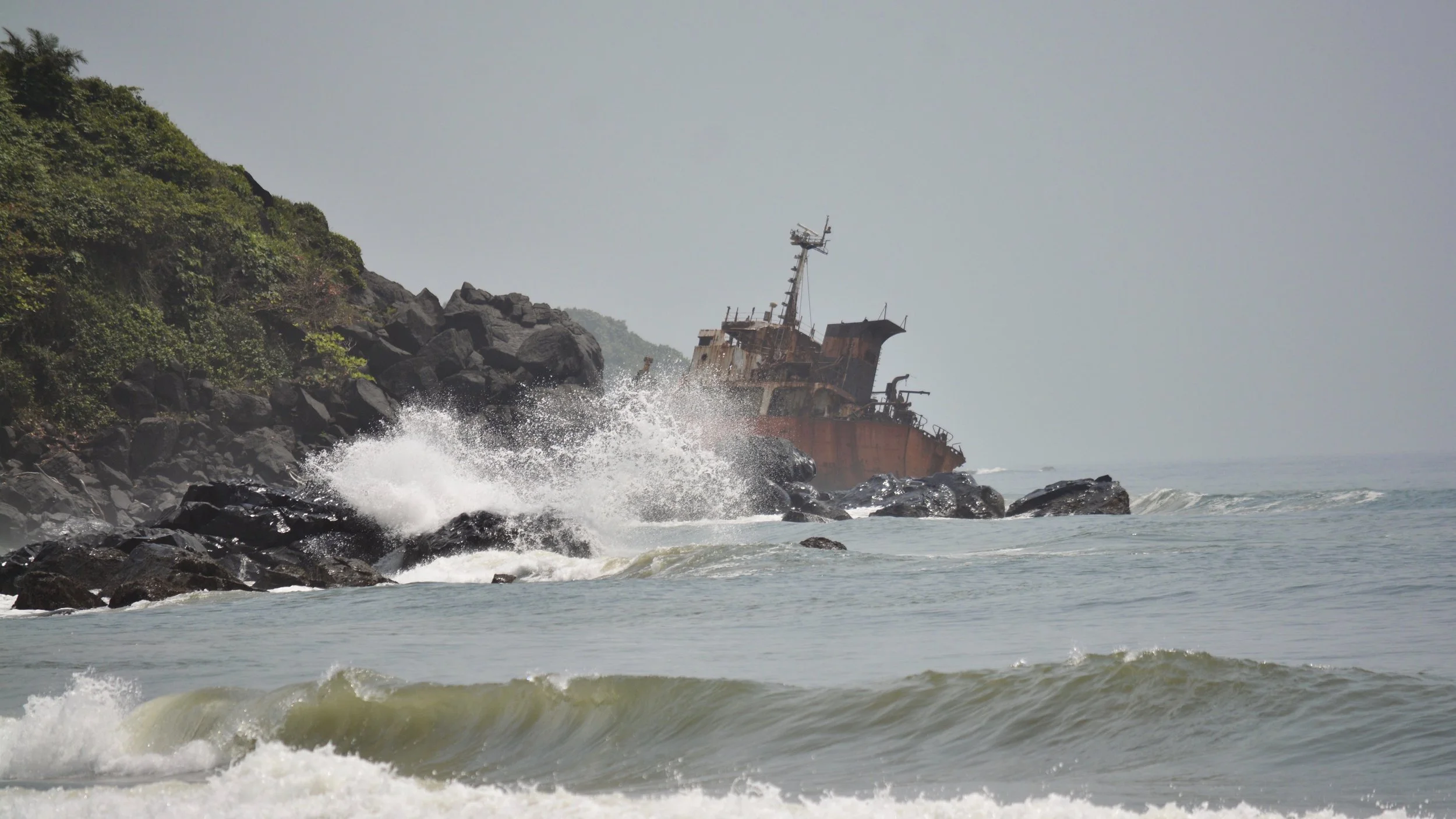
The following morning we walked south along the coast toward a shipwreck that sits just offshore, half-submerged in the shallows. The route followed the beach for most of the 30-minute walk, occasionally cutting inland through scrub or forcing us over rocky outcrops sloping toward the water.
As we approached, the shape of the vessel emerged. Twisted railings, gaping cargo holds, and the skeletal remains of steel plates blistered and flaked showing the years of salt and storms. Locals told us the vessel ran aground decades ago and was abandoned where it came to rest when salvage proved impractical.
There was no clear way on. The lower sections were slick with algae and barnacles, and the metal throughout had softened with corrosion. Lucy gave me a leg up and I stepped onto the deck, moving slowly as the steel dipped beneath my weight just enough to make the ship’s interior feel close.
Inside the cabin on the top deck, light entered through torn seams where windows had once been. I had just identified a route deeper down when a wave struck the hull, sending spray skyward and into the cabin. The decayed layers of the frame answered with a low, uneven shift. We took that as our cue to stop, our brief experiment in piracy concluded.
What stood out was the lack of mediation. There were no warning signs and no barriers. It remains there without explanation, only local stories that change with each re-telling, and absorbs the weather and seasons as part of Robertsport’s ongoing relationship with the Atlantic.
As we walked back along the beach, we talked about food, returning to the familiar subject of mackerel, and glanced back occasionally at the wreck. Its rusted silhouette faded and reappeared in the sea mist and shifting light, taking on an almost watchful presence. Our conversation shifted toward the town beyond the coast. Later that afternoon, we turned inland and headed towards what remained of Robertsport’s earlier life.
“Robertsport still bears the imprint of the southern United States. The town was shaped by Americo-Liberian settlers, formerly enslaved people who arrived from the U.S. in the nineteenth century, and is named after Joseph Jenkins Roberts, Liberia’s first president.”
Low hills rise behind Robertsport, their slopes beginning almost immediately beyond the last line of houses. A rough footpath leads inland from the beach, cutting away from the shoreline activity and climbing toward the ridge that overlooks the town.
Robertsport still bears the imprint of the southern United States. The town was shaped by Americo-Liberian settlers, formerly enslaved people who arrived from the U.S. in the nineteenth century, and is named after Joseph Jenkins Roberts, Liberia’s first president. Born free in Norfolk, Virginia, Roberts emigrated in 1829 under the American Colonization Society and went on to help establish the political structures of the new republic. Those early American influences remain visible in Robertsport’s layout and institutions, even as the town has long since moved beyond them.
As we climbed, the path threaded past modest homes built into the slope. A woman sat beneath the corrugated iron overhang of her house, methodically de-scaling cassava fish in the shade. Narrow footpaths branched off toward small clusters of houses stitched into the hillside, their frames patched with sheet metal. Doors stood open to the breeze and plastic chairs were pulled into pockets of shade on verandas doubling as living rooms. Domestic life naturally spilled into the lanes.
Giant cotton trees grew even larger here being rooted in deeper soils and sheltered from the salt spray. Like those lining the shore and guiding surfers along the breaks, they reappear inland as landmarks through the greener parts of town.
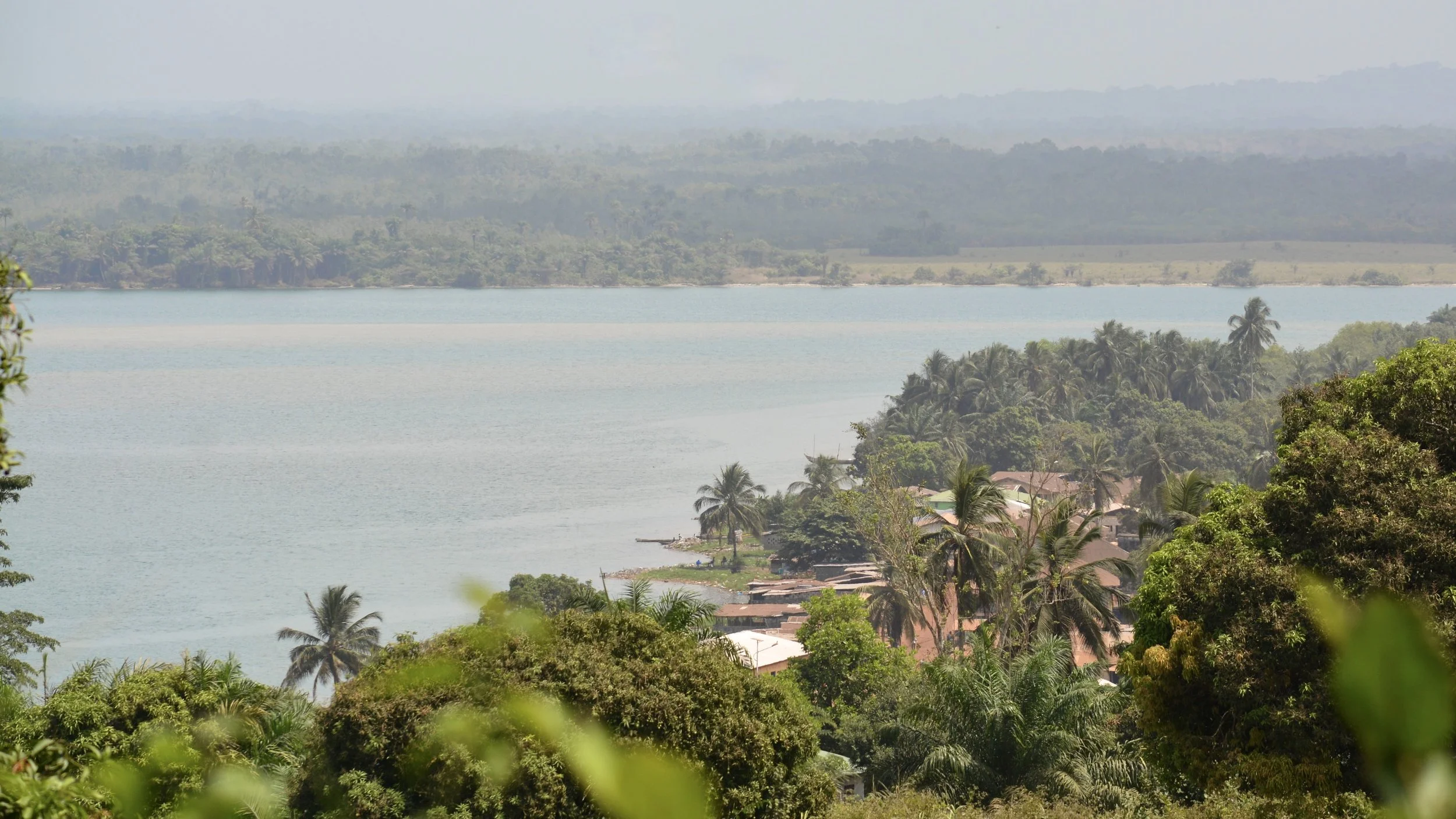
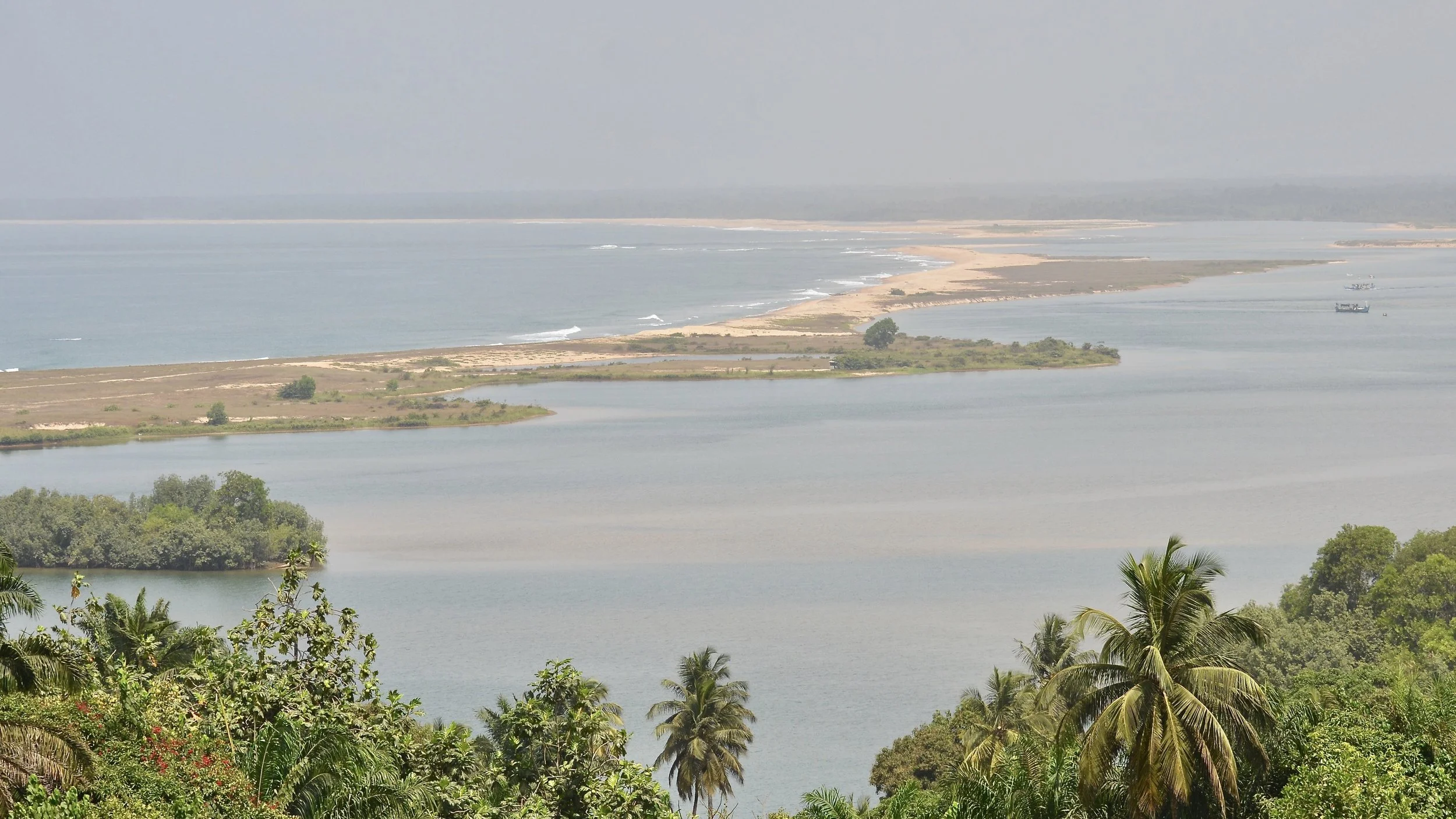
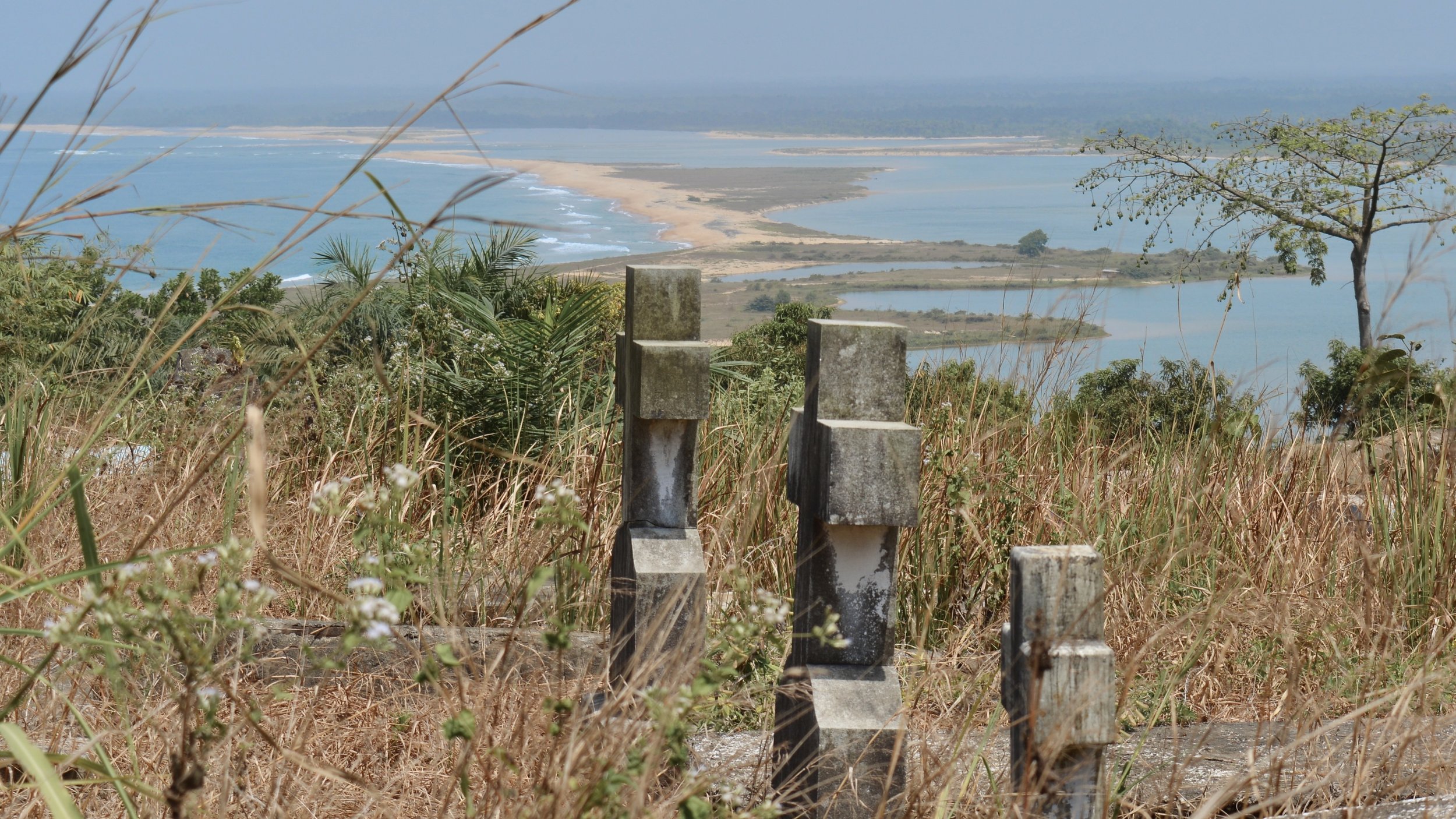
The climb was steep enough to slow us down. The red earth and scrub thinned only as the slope eased near the top. From the crest, the town fell away sharply. To the east lay Lake Piso, Liberia’s largest tidal lagoon, its waters pushing into mangrove-fringed inlets. To the west, the Atlantic stretched beyond the surf line and the clustered rooftops of the town’s low grid were set against it.
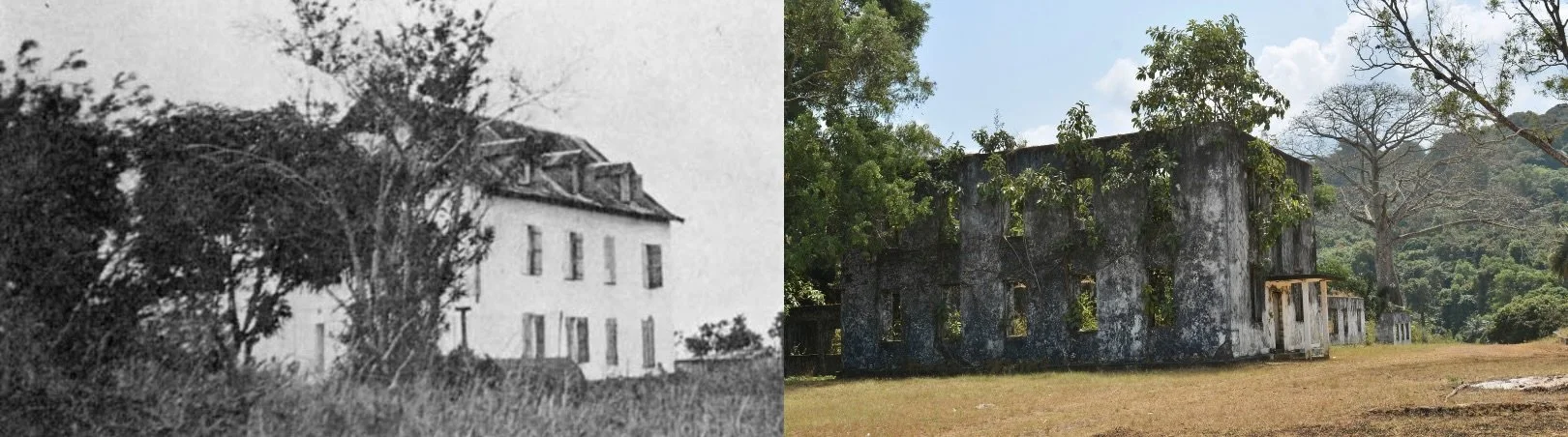
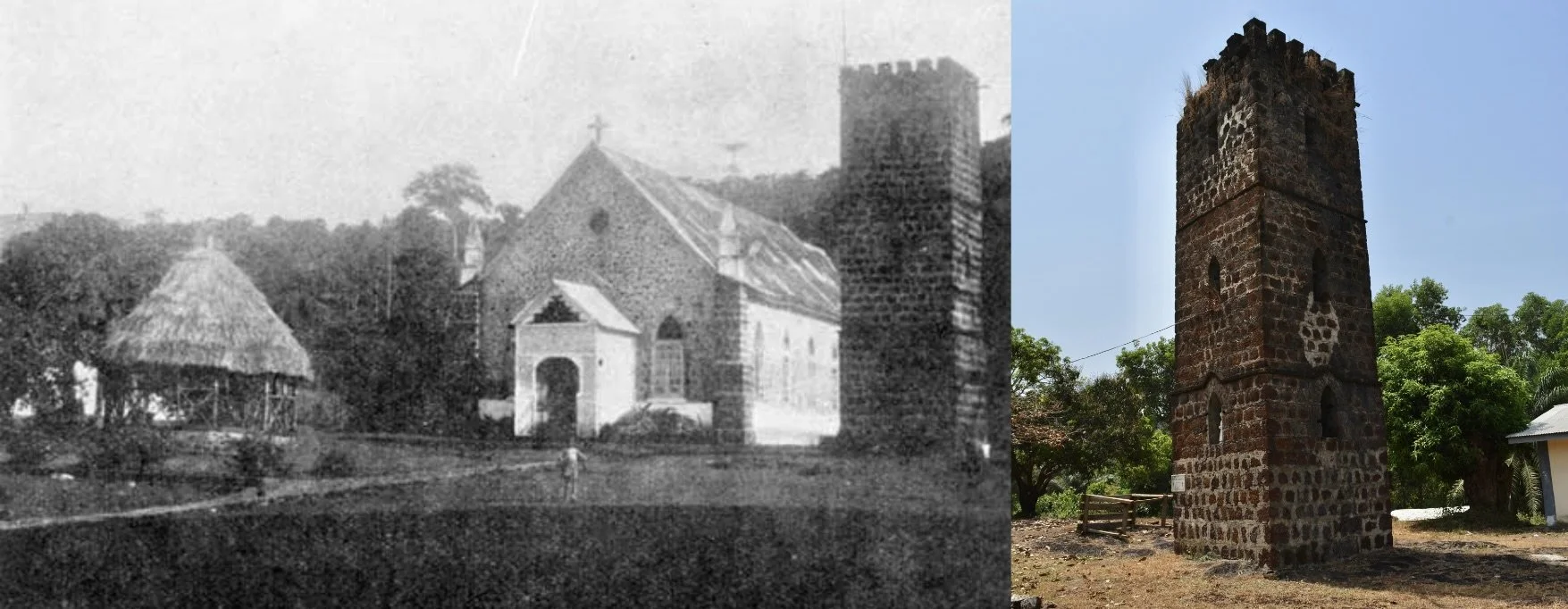
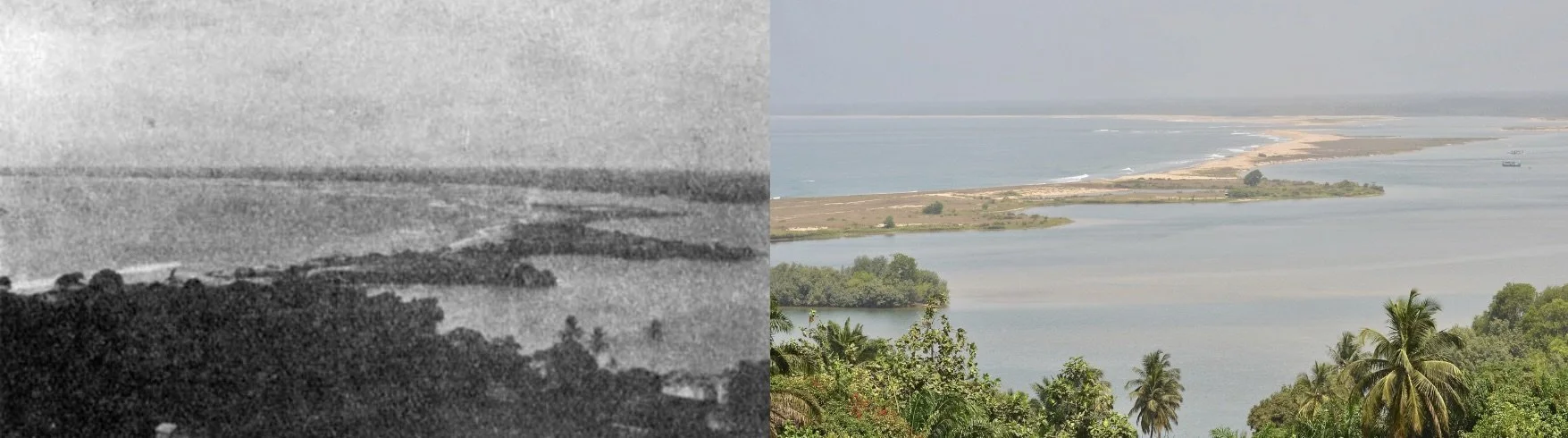
Near the summit stand the remains of three institutions that once anchored Robertsport’s civic and spiritual life. The most prominent is the Tubman Centre of African Culture, opened in the 1960s as a national museum and educational hub, now reduced to a weathered concrete shell after years of neglect and civil war. Nearby are the traces of St. John’s Episcopal Church, marked by an early twentieth-century graveyard where iron crosses lean among eroded headstones, the church itself long gone from its hillside vantage. Close by are the remnants of St. John’s School, once spread across several stone buildings, including the Langford Memorial Dormitory, where a small staff educated nearly two hundred boys drawn largely from the Vai, alongside Bassa, Mendi, Kru, and Mandingo communities.
From the ruins, the hollowed buildings and neglected graves were the unmistakable evidence of repeated upheaval, but the view also spoke to Robertsport’s persistence. Its access to sea, land, and trade were laid out plainly from above.
The next day it was time to leave Robertsport for the capital, Monrovia ..